The right Pay-Per Click (PPC), or advertising agency, can make a huge difference to the growth of your business and its revenue. A reputable agency will serve as your strategic partner, maximizing the ROI of your advertising spending. They can also generate qualified leads. If you choose the wrong partner, it will eat up your budget and slow down the pace of progress. Selecting a business partner with a practices, culture, and expertise match your particular goals isn't easy. These ten strategies will assist you in evaluating the agencies you choose and ensure that they can produce tangible results while maintaining productive long-term relationships.
1. Conduct an internal audit and establish your objectives.
Before you contact any agencies, you should be aware of what your individual requirements are. This means a thorough examination of any PPC campaigns you may have conducted, the budget, and your goals for business. Do you want to achieve branding recognition, lead generation, direct sales via online shopping, or foot traffic as part of your business goals? Determine specific, measurable relevant, achievable and time-bound objectives (SMART). Instead of "get leads," specify that you are looking to "increase the volume of qualified leads by 30% over the next two quarters, with a cost for leads below $50." This allows you to effectively communicate your needs and provide an example to judge agency proposals to.
2. Think about their experience in the industry and expertise.
While general PPC expertise can be transferred, knowledge of your particular industry or closely related niche is invaluable. An agency that has experience in your market can help you know your audience's pain points as well as the competitive landscape common keyword bidding challenges, and industry-specific compliance issues (e.g. financial services or health care). When you are vetting the agency, ask for and review the case studies of clients within your sector. Examine their strategies on how they faced industry-specific issues and achieved success. Be wary of a company that collaborates directly with competitors.
3. Evaluation of their reporting and communication methods.
Effective communication between the agency and client is crucial to establishing an effective relationship. Find out about their operational procedures: Who will be your primary contact person? What is the frequency you'd like to call or meet? What is their standard response time to urgent or email issues? Pay attention to their reporting process. The most effective agencies do not only send out automated reports. They provide easy-to understand analyses that link PPC performance to your business objectives. It is recommended to request a sample of the report. It should contain suggestions, insights and the context of the report rather than only numbers.
4. Assess Your strategic foundation and Tool proficiency.
If the agency is solely based on "button pushing" and not a strategic data-driven strategy, then you should be able to tell. Ask about the company's method of PPC fundamentals such as audience segmentation and testing, keyword research as well as landing page collaboration and ad copy. Also, verify their familiarity with the most important tools. The person should be active in using and is certified with platforms such as Microsoft Advertising or Google Ads. Also, they must have knowledge of complementary tools such as Google Analytics 4 (GA4) and Google Tag Manager.
5. Request and Meticulously Review Client References.
Any agency can present a polished sales deck. It's best to speak directly with current or past clients regarding their experience. When given references, ask specific questions regarding the strengths and weaknesses of the agency, their adaptability to changing goals, the quality and efficiency of their communications and the tangible business results they have achieved. To get a full picture, check out independent review platforms such as Clutch Reviews and Google Reviews.
6. Learn about their Team Structure and Who Will Manage Your Account.
Knowing who will manage your campaign on a daily basis is essential. Your account could be handled by with the help of a PPC strategist who has experience for years, a junior team leader, or a junior account manger. To ensure that you are receiving the best service, ask to meet one of the team members or a particular person. Examine their enthusiasm, expertise, and experience. The high turnover rate among account managers can be an indication of danger, as it can indicate internal issues and leads to a lack in continuity for your campaign management.
7. Define pricing models, contract clauses and other details.
Agencies use various pricing models, including percentage-of-ad-spend, flat monthly retainers, hourly rates, or performance-based fees. Know the complete cost structure and what's included. Be wary of firms which make you sign long-term contracts prior to having a track record of success. Take a look at month-to-month agreements or contracts which have a reasonable term and a clearly defined end-of-contract clause. Pricing transparency is a must There should not be unexpected fees or charges.
8. Examine the method of their technology and their transparency.
The advertising accounts you use should be yours (e.g. Google Ads or Microsoft Advertising). Make sure that the agency is prepared to allow you access to every administrative function. Transparency lets you review your work at any time. This also means that you have the ability to move to a different agency should you need to. Determine if the agency is based on proprietary technology, a third-party platform, or any combination of the two. Find out how to utilize these tools in their reporting and strategy.
9. Probe Their Capabilities Beyond the core PPC Platforms.
A top-tier digital agency will have expert knowledge across the entire spectrum of digital advertising. Inquire about their experience with platforms like Microsoft Advertising (which often offers a different audience at a lower cost), social media PPC (Meta/LinkedIn/TikTok), and programmatic display advertising. They will use a holistic approach to identify the right channel mix for you rather than imposing a single-size-fits all solution.
10. Assess Cultural Fit and their role as a Strategic Partner.
Take into account the non-tangible aspect of a the cultural fit. The agency should feel like an extension of your staff. Do they show genuine interest in understanding your business? Inquiring questions with a logical approach and offering innovative ideas is a proactive action. The relationship should be co-operative. The best PPC agency isn't only executing tasks, but they also are a strategic advisor always seeking out opportunities to expand your business and align their efforts with your overarching company vision. View the best top ppc agencies tips for blog examples including ppc advertising, google adwords and ppc, ppc company, click ppc, ppc company, google ppc campaigns, google adwords what is it, google adwords ppc campaign, google advertising services, ad google and more.
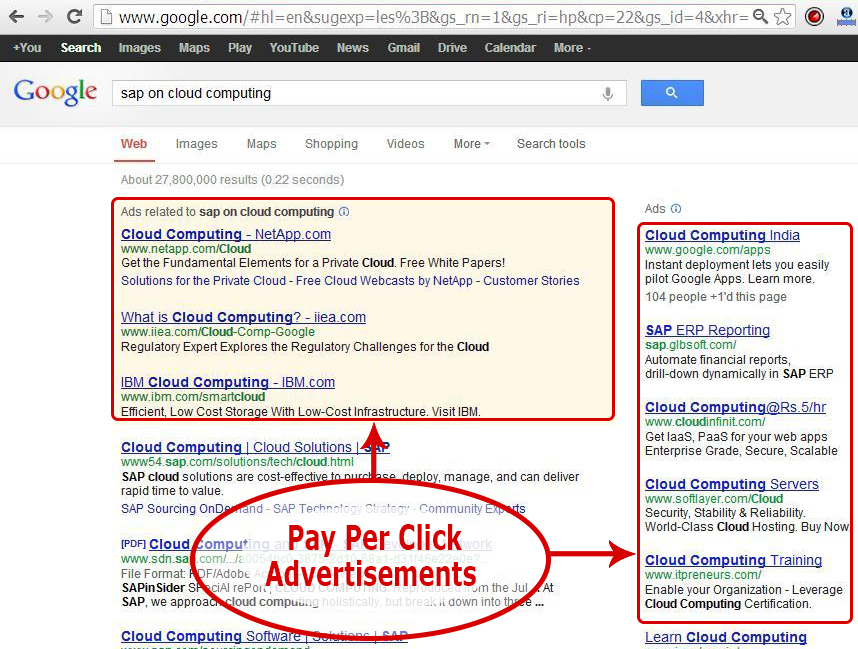
The 10 Most Popular Ppc Trends Being Utilized By The Most Effective Agencies.
Pay-per Click (PPC) is evolving in a continuous and fast speed, fueled by advancements in technology as well as changing privacy standards and new platform capabilities. The most effective PPC companies don't just react to the changes; they utilize these to gain an advantage over their customers. To achieve outstanding outcomes, it's essential to keep up-to-date with the latest developments. Leading companies are shifting away from traditional keyword-centric approaches and entering a brand-new age powered by AI measurement that is privacy-centric, and immersive ad-experiences. It's the knowledge and application of these crucial trends that will distinguish mediocre campaigns from future-proofed extraordinary ones. These ten trends illustrate the most current trends in PPC strategies that the top agencies are using to increase effectiveness, engagement, and ROI.
1. Strategic adoption of AI and Smart Bidding.
The best agencies have moved from merely using automated bidding to strategically guiding and improving it. They leverage AI-powered strategies like Maximize Conversion Value and Target ROAS not as an "set it and forget it" solution, but rather as a powerful engine that requires top-quality fuel. Their expertise is to provide the AI with precise conversion tracking and rich, first-party data and accurate, data-driven objectives. They focus on understanding AI actions and incorporating human-like strategies in the areas of creative targeting, audience-specific, and landing pages alignment.
2. Privacy-Centric Measurements and First-Party Data Strategy.
As a result of the gradual phase out of third party cookies as well as more stringent privacy laws for data, agencies are creating new measurement frameworks. Google Analytics 4 is being heavily used by agencies because of its privacy-focused and event-based features. They are currently focusing on building and leveraging their own data assets. This includes customer email lists to make use of for Match with customers. Match. Additionally, it involves encouraging subscribers to newsletters.
3. The Rise of Automation-First and Performance Max Campaigns.
The top agencies are not afraid of the power of platform automation. In fact, they are experts in it. Performance Max campaigns are used to supplement, and not replace, their primary strategy of shopping and searching. They know the most effective way to group assets, create top-quality marketing materials and utilize feedback from the audience to guide AI. It's now more crucial to automatize campaigns by "orchestrating" them.
4. Integration of Artificial Intelligence for Ad Creative.
AI is changing the ad-creation process. To scale and optimize their creative processes, top agencies employ artificially-generated AI tools. AI can quickly create a variety of ads for Responsive Ads. make compelling headlines, and create basic images and video assets for Display and Discovery campaign. This allows for unprecedented speed of testing and data-driven creative optimization. It also frees up human strategists so that they can focus on brand messaging and strategy.
5. Expansion to Amazon Media Networks as well as Retail Media Networks.
Recognizing that customer journeys typically start with a simple search, the top agencies have expanded their expertise past Google and Meta into additional Retail Media Networks. These include Walmart Connect, Instacart and Amazon Advertising. They know how to leverage the closed loop dynamics of these ecosystems that feature ads that are displayed at the point of purchase.
6. Advanced YouTube and Video-First Advertising Strategies.
As video content dominates the market, top companies are moving past simple pre-roll advertisements. They are developing a sophisticated YouTube strategy that utilizes the full funnel. This includes skippable, in-stream advertisements for awareness of users at the top of the funnel, and leveraging customized intent audiences based on search behavior and also implementing effective video actions campaigns that drive conversions straight through the platform. They view video not as an afterthought but as a fundamental element of the media mix.
7. Broad Matching and Smart Bidding
Smart bidding has flipped the old rule of making use of broad match keywords on its head. Broad match has become a powerful tool for agencies seeking to identify new high-converting, high-converting queries. It is difficult to predict manually. They trust AI's capacity to comprehend the user's intent. They employ negative keywords lists more like a "guardrail" rather than a "crutch" and discover new, efficient volumes of traffic.
8. A Focus on GA4 insights and Cross-Channel Integration.
As Universal Analytics comes to an end, Universal Analytics, proficient agencies have fully migrated to Google Analytics 4. Its cross-platform capabilities allow users to get an overall view of their customers' journey. The deeper information GA4 gives into user engagement, such as scroll depth or video views and are utilized to help create more qualified viewers. GA4's tools for path analysis aid in understanding how PPC interacts and works alongside other channels. This results in a more intelligent budget allocation.
9. Strategic implementation of customer acquisition as compared to. Retention Campaigns.
Leading agencies are focusing their efforts on more than just getting new clients. They develop segmented strategies to focus on existing customers to keep them, cross-sell and even upsell. Through Customer Match and data segments they create unique campaigns and custom messages for past purchasers. Knowing that the CPA is less for these campaigns and the LTV is higher, this improves overall account profitability.
10. Optimized Core Web Vitals and Enhanced Landing Pages Experience.
Understanding that ad tech and user experience are tightly related, top agencies have expanded their purview to include performance of landing pages and the Core Web Vitals (Loading Interactivity, Loading Stability). They audit and give recommendations regarding page speed, usability, and design. They collaborate with web developers to optimize the post-click user experience to increase conversion rates as well as the Page Experience signals from Google. Take a look at the top article source about best pay per click companies for blog info including google ad campaign, ads strategies, ads google shopping, ads branding, ads account, leads google, ppc advertising agencies, ads and campaign, google ad fees, ads adwords and more.
