To select the ideal robot pool cleaner, it is crucial to be aware of the features of the pool. It is important to match the performance of the machine to your pool. A robotic pool cleaner is a significant investment. These are the important aspects to consider, as they can result in the cleaning process being less effective and damages to the pool or the machine, or even buyers' regret. This comprehensive guide provides the 10 most important specifications for your pool you need to know before buying.
1. Primarily Surface Materials:
The most crucial aspect to be considered is this. The exterior finish of the pool determines the type brushing mechanism that the robot should have to be able to clean it without causing harm.
Concrete/Gunite/Plaster (including Pebble Tec & Quartz): These are rough, durable surfaces that often develop algae films. They require a robotic system equipped with stiff bristle (often vinyl or nylon coated) brushes that are able to aggressively scrape and scratch the surface to loosen embedded biofilms and dirt.
Vinyl Lining: Vinyl is elastic and soft. It is very easy to scratch or puncture. Robots for vinyl need to use soft, non-abrasive brushes (usually made of pure vinyl or Rubber) and wheels that don't have sharp edges. The use of a cleaner that has stiff brushes for concrete could lead to premature wear and tear of the liner.
Fiberglass Shells: Fiberglass shells are very smooth and have gel-coated finishes. As with vinyl, they can be scratched by abrasive substances. Robots that have soft rubber brushes or brushless rollers are great. It's possible that robots utilize less power to wash the surfaces when they are smooth.
2. The shape and complexity of the pool
The length and navigation intelligence required for your pool are directly determined by the geometry.
Rectangular and. Freeform: A straightforward rectangular pool is easier to clean. A majority of robots are capable cleaning it. Robots with a simpler design may get caught in the curvatures or coves in freeform, L-shaped kidney-shaped and other pool shapes. A robot with advanced algorithmic navigation is best for these pools.
Ledges or Coves. The point at which the floor of the pool connects to the wall (the cove), can be an ideal place for debris to collect. Check that the design of your robot allows it to wash this curved region. Check that your robot can clean the large sun shelves or ledges (Baja shelves) in your pool. Certain models are intended to clean floors or walls.
3. Pool Dimensions (Lengths, widths, and maximum depths)
For selecting a model that is compatible with a power cable, these measurements can't be discussed.
The length of the cable: A general rule of thumb states that the length of the robot cable must be at least the largest dimension of your pool (usually the length) plus a few feet to route the cable across the entire perimeter. This will also ensure that the power supply is able to be positioned away from the water. 60 feet of cable is the norm for medium to large-sized pools. Before purchasing, take a measurement of the length of your pool.
Depth Capability. Modern robots can clean as deep as 8-10 ft. If you own deep ends that go beyond 10 feet (e.g., a diving pool), you must verify the depth rating of the robot's maximum. This could cause the pump motor to overload and cause the warranty to be invalidated.
4. The level of water and tile/coping:
Cleansing the connection between the water structure and the pool's surface is essential.
Cleaning the waterline tiles is a function that's available on robotics that are that are in the mid-range to top-end price range. If you are experiencing an ongoing problem with scum lines appearing on tile or glass at the waterline, you want a robot that is specifically advertised as having excellent waterline cleansing capabilities. This is usually accomplished by the use of a robot that has a slightly modified climbing patterns.
The material that is used to cover the walls of the pool (coping) is usually pavers or stones. If the wall has a sharp, aggressive overhang, it can be a potential cause of snagging or damaging the robot's cable over time. It is crucial to keep this in mind when routing your cable.
5. There are numerous elements and obstacles within the swimming pool.
A pool free of debris and hazards is easier to keep clean.
The main vents and drains should be flush with surface of the pool. They must also be securely fastened. Certain older drainage systems that protrude can trap smaller robots. Water return outlets on floors generally aren't an issue.
Steps can pose a challenge for robots. Ladders are also problematic. Ladders with legs positioned on flooring could catch robots. Robots that have enough strength and traction are required to clean and climb steps and benches. These areas can be avoided with simple robots that use random navigation, however, smarter models are able to handle these areas.
Clean these flat surfaces just like you would steps. Verify that the robot can move across the horizontal surface.
6. Points of Entry and Exit (for Robots)
How will you maneuver your robot in and out of the water?
Physical Access: Do you need to carry the robot up a set of stairs or across a deck then lower it into place? If that's the case the weight is an important factor. A robot that weighs 25lbs is much easier to manage on a regular basis than one that weighs 40 pounds. A storage caddy will be practically essential in this scenario.
Above-ground pools: Although they are less common, there are specially designed robots to be used in above-ground pools. They are typically smaller and are not designed to climb up walls.
7. Type and Volume of Debris:
What features you require will depend on the main "job" that your robot must perform.
Filtration system: If dust, pollen or sand is the primary issue it is essential that you use an industrial robot equipped with ultra-fine filter cartridges (pleated paper or extremely tightly woven mesh) to capture microscopic particles. The robot must be equipped with and able to use ultra-fine cartridges like pleated paper or very tightly woven mesh, so that it can effectively filter out microscopic particles.
Leaves Twigs Acorns You need a machine that includes a large trash bin/bag and powerful suction pumps and an intake which won't easily clog. Some high-end robots have impellers specially designed to break down larger leaves, and to prevent from clogging.
8. Placement of power source and outlet type
Robotic cleaners run on low-voltage DC electricity provided by a plug-in transformer.
GFCI Outlet Requirement: The power supply MUST be connected to a ground Fault Circuit Interrupter (GFCI) outlet to ensure security. This isn't a matter of negotiation. If you don't have one near your pool, you must have one installed by an electrician.
Distance from Pool. To shield the transformer from water splashes and rain, it should be placed at least 10 ft away from the edge of your pool. The cable should be sufficient to reach your pool's furthest point.
9. Local Climate Environment and Storage Environment
The way you store your robot affects its longevity.
Storage during the off-season. Many manufacturers warn against keeping your robot under direct sun or submerged for extended durations. UV rays damage cables and plastics. When not in use, you need to keep your robot and cables in a place which is cool, dry and shaded (such as an outdoor shed or garage).
Use the Robot During the season: If your robot is frequently used for a long time, you might want to consider purchasing a storage container that allows you keep your robot in order near the pool. You will not have cords get tangled on the deck.
10. Existing Pool Circulation and Filtration:
Although a pool robot works on its own, it is an integral part of the system.
Additional function: Be aware that the job of robots is to remove settled dirt and clear surfaces. It is not meant to replace the main circulation and filtration system of your pool, which is responsible to filter the dissolved particles, distribute chemicals, and stop algae. It acts as a supplementary cleaner, reducing the burden placed on your main filters.
Chemical Balance - Even a perfectly clean pool surface can become polluted by algae if the chemical balance is out of equilibrium. Robots can aid in maintaining the cleanliness of your pool, but it will not substitute for proper sanitization or balance of water. Follow the most popular pool cleaning tips for blog info including pro pool cleaner, swimming pool com, pool robot, swimming pool automatic vacuum, pool skimming robot, best way to clean swimming pool, any pool, pool waterline, swimming pool for swimming, waterline cleaning and more.
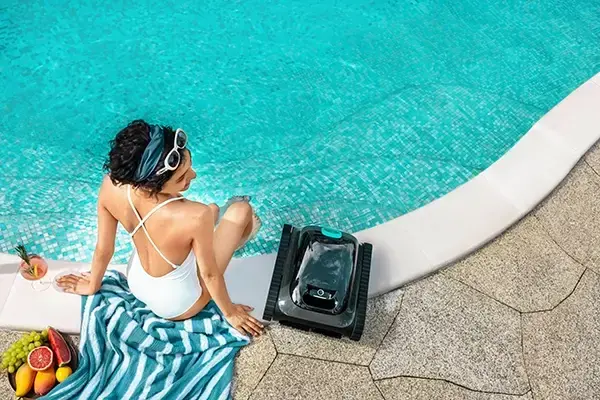
Top 10 Tips For Improving The Energy Efficiency Of Robotic Pool Cleaners
It is vital to understand the power source and energy efficiency when looking at robotic cleaners. This can affect your operating expenses overall and also the environmental impact of your pool and the ease of use. The newer robotic cleaners don't depend on the main pool pump. This is a high-energy system. The robot cleaners are powered by their own motor which is low voltage and efficient. The biggest benefit of these robots is that they can save huge quantities of energy. Not all robots, however, are the same. If you look at the operation modes, power consumption, and infrastructure required, you can select the robot that has the highest performance, while reducing its use of electricity for household appliances. This can transform a high-end item into a smart, affordable investment.
1. The Fundamental Benefit: Independent Low Voltage Operation.
This is the basic idea. The robotic cleaner is powered with a separate transformer which plugs into an ordinary GFCI socket. It is usually powered by low-voltage DC like 32V or 24V. This is safer and more efficient than running an 1.5-2 horsepower main pool pump multiple hours every day. This independence allows for the operation of the robot with no needing to run your energy-intensive pool pump.
2. Watts vs. Horsepower. Horsepower.
Knowing the size is crucial to appreciate the savings. The main pump of the typical pool uses between 1,500 watts and 2,500 per hour. In contrast, a high-quality robotic pool cleaner consumes between 150 to 300 Watts per hour during its cleaning process. This represents an approximate 90% reduction in energy. The energy used to power a robot over 3 hours is equal to the power required to run several lightbulbs in your home simultaneously. This compares with the main pump which draws energy similar to an appliance.
3. The DC Power Supply/Transformer and its crucial role
It's more than just a regular power cord. The black box, which is between the outlet and the robot's cable is actually a smart transformer. It converts household 110/120V AC current into DC power that the robot is able to use. The quality of this part is essential to ensure the robot's safety and performance. It also includes the control circuitry used to program the cycle.
4. Smart Programming for Better Efficiency.
The robot's programming directly affects the energy consumption of the robot. Selecting specific cleaning cycles to increase efficiency option is an excellent option to boost your robot's energy consumption.
Quick Clean/Floors Only Mode: In this mode the robot is running for a shorter period of time (e.g. approximately 1 hour), with the algorithm only cleaning the floors. This mode consumes less energy than an entire cycle.
Full Clean Mode: Standard 2.5 to 3 hours cycle for thorough cleaning.
To ensure that you do not waste energy to avoid wasting energy, only use only the amount of power required to finish the job.
5. The Impact of Navigation on Energy Consumption.
The route taken by a robot cleaner is closely tied to the power it consumes. A robot using random navigation (bump and turns) is inefficient. It can take hours to clean the entire pool. A robot with systematic, gyroscopically-guided navigation cleans the pool in a methodical grid pattern, completing the job in a shorter, predictable timeframe (e.g., 2.5 hours), thereby using less total energy.
6. GFCI Outlets Requirement & Placement
The source of power for the robot must be plugged directly into a Ground Fault Circuit Interrupter Outlet (GFCI). These outlets have "Test" and "Reset" buttons commonly found in bathrooms and kitchens. The cleaner must be used only when there is a GFCI outlet in the pool area. If there isn't, an electrician must install one. It is recommended that the transformer be installed 10 feet or more away from the pool area to protect it from splashes of water.
7. Cable Length and Voltage Drop
The power that travels through the cable at low voltage could suffer a "voltage drop" when stretched over long distances. The manufacturers recommend a certain length of the cable (often between 50-60 feet) with good reason. If you go over this limit, the robot will not get sufficient power, which can cause slow and inefficient movements, and reduced climbing abilities. The robot's cable must be long enough to reach the furthest point of your pool from the outlet. Don't use extension cables as they could cause voltage drops and pose danger to safety.
8. Comparing Efficiency with other types of cleaners.
To truly justify the initial cost, understand the things you're comparing it with.
Suction Side Cleaners depend entirely on the pump that is used for. You must keep the pump running for six to eight hours every day.
Pressure-Side Cleaning: This kind of cleaner utilizes your primary pump to create pressure, as well as an additional pump that adds an additional 1-1.5 HP to the constant energy draw.
In the long-term, the robot is the most cost effective option due to its efficiency.
9. Calculating operating costs
You can estimate the price for running your robot. It is calculated as follows: (Watts / 1000) x Hours Used x Electricity Rate ($ per kWh) = Cost.
Example: A robot with 200 watts that is used for three hours a day, for 3 days over three weeks, at $0.15 a kWh.
(200W / 1000) = 0.2 kW. 0.2 kW x 9 hours per week equals 1.8 kWh. 1.8 Kilowatts multiplied by $0.15 equals $0.27 per week or $14 annually.
10. Energy Efficiency as an Quality Marker
In general, high-quality items have motors that are of higher efficiency and greater sophistication. A robot that cleans thoroughly in less time and with less power usually suggests superior engineering, better navigation software as well as a more powerful yet efficient pump system. While a more powerful motor may indicate greater power for climbing and suction but it's the combination of powerful cleaning and a quick low-wattage time frame that defines the true effectiveness. It pays to invest in a model with a high-efficiency rating. You'll reduce your utility bill each month for a long time. Read the top rated robot piscines pas cher for site tips including robotic cleaners, swimming pool vac, swimming pool crawler, robotic cleaners, cleaner for swimming pool, pool cleaning how to, swimming pool robot, swimming pools stores near me, pool cleaner pool, pool waterline and more.
